
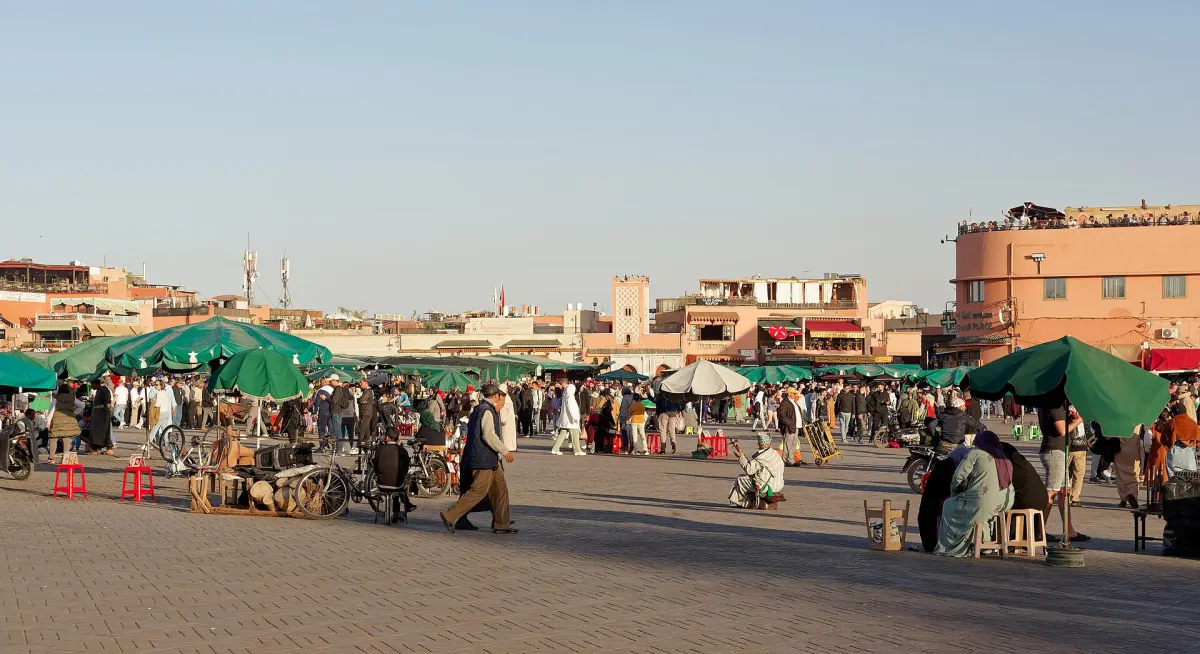
A rental car in Marrakech is either the best decision of your trip or an expensive piece of scenery, and which one it is has little to do with how much you like driving.
Why the car changes Marrakech
The medina — UNESCO-listed since 1985, with about a million people in the modern city around it — was laid out for donkeys and handcarts, and it still works that way. Inside the walls there is no road worth the name: the widest alleys take a handcart, a moped and a loaded donkey, and not all three at once.
What a car changes is the distance between Marrakech and everything next to it. The Agafay plateau is 45 minutes south-west, the Ourika valley an hour, the Atlantic two and a half hours west, and the Tizi n’Tichka pass at the end of a road that begins at the city’s southern edge.
So be honest about which trip you are taking. If the plan is a riad in the medina, five days of souks and Jemaa el-Fna after dark, a car is a cost you do not need: it will sit in a guarded lot at 40-70 MAD a night while you walk everywhere. Rent one for the days you leave the city, not for the week.
Parking around the medina
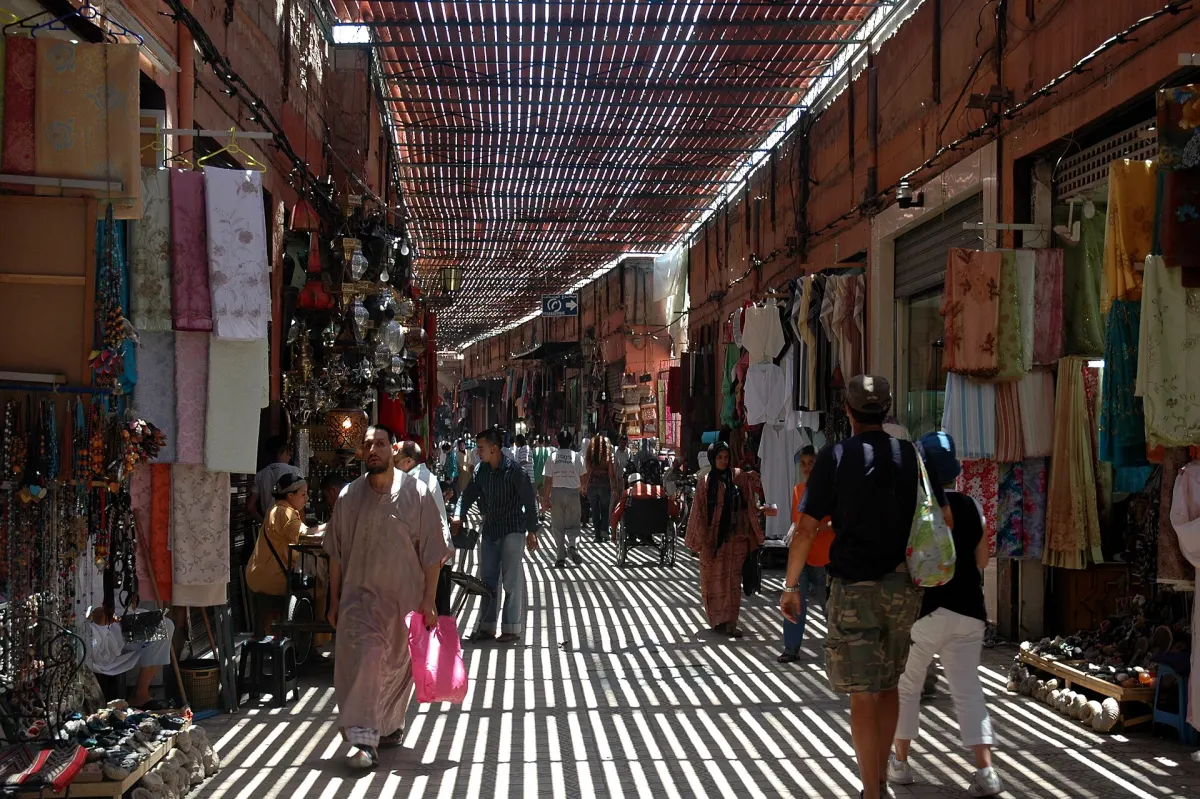
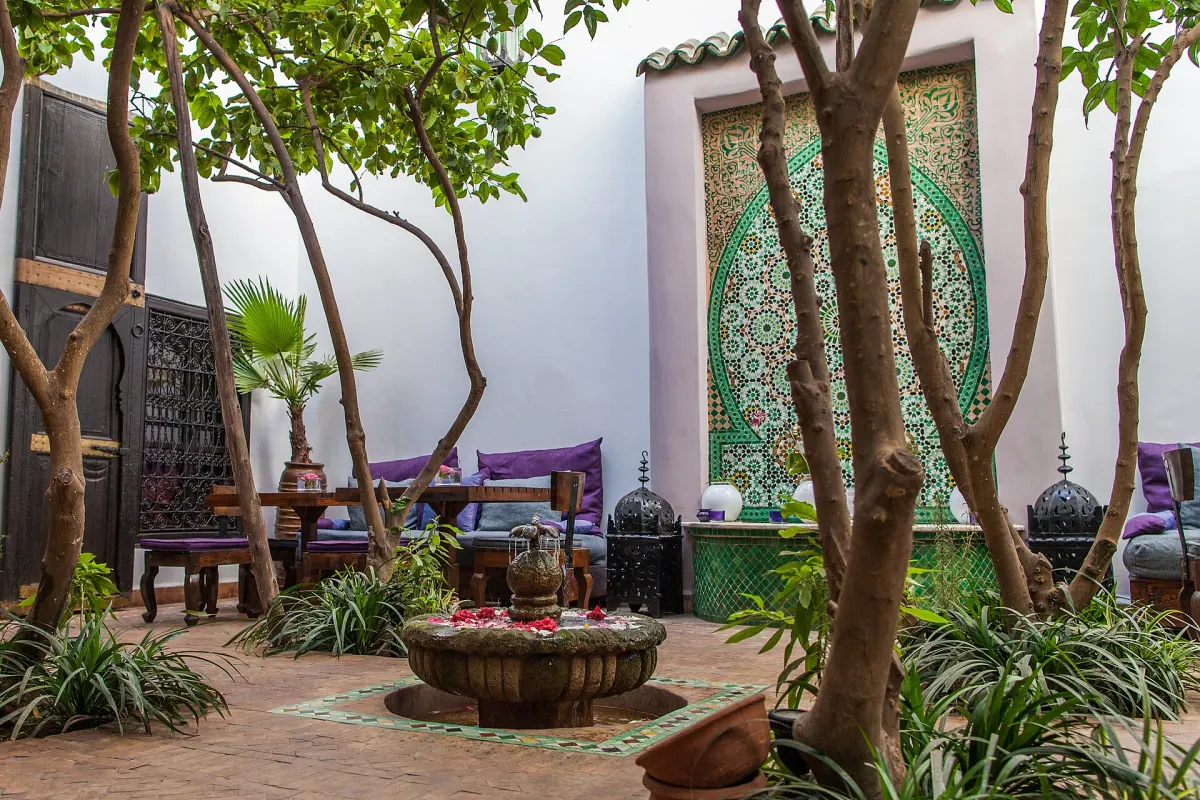
You cannot drive in the alleys, and most riads are not reachable by car at all. A riad’s “address” is a door in a pedestrian alley, and the last 100 to 400 metres are on foot, often uphill. Ask before you arrive whether someone can meet you with a handcart; many riads do.
Three guarded lots cover the medina, one per side:
- Bab Doukkala, north-west, next to the bus station — the northern medina and the souks around Souk Semmarine.
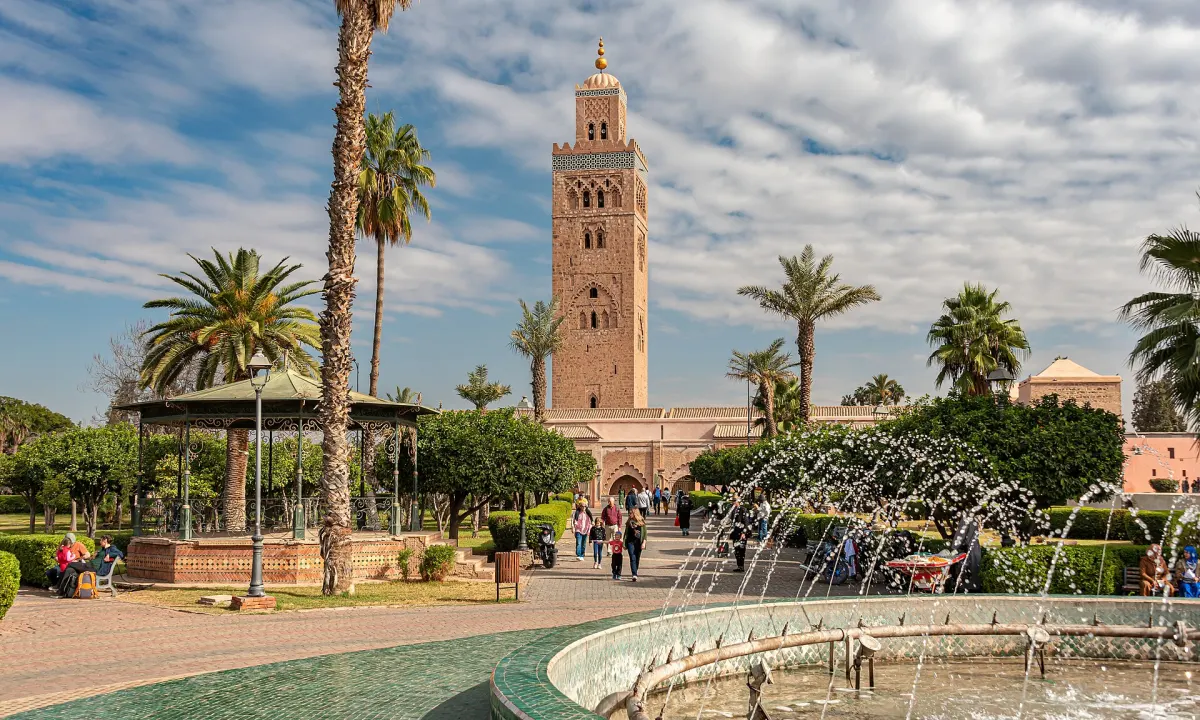
- Koutoubia, south-west, by the minaret’s gardens — the southern medina, Jemaa el-Fna and the kasbah.
- Bab Laksour, west, a few minutes from the square — closest to Jemaa el-Fna, and the first to fill in high season.
Indicative prices in 2026: 10-20 MAD the first hour, 30-50 MAD a day, 40-70 MAD overnight; a space arranged through your riad runs 50-100 MAD. You pay the guardian in cash and keep the ticket.
Aiming for the lot nearest your riad makes arrival worse, not better. Those lots sit on one-way streets you will reach only after three laps of the same block, and the last 200 metres are exactly where the street narrows to fit one vehicle and one cart. Park at the edge, walk six minutes, and decline the man on the moped offering to lead you to parking.
Driving the ring road
Marrakech has no single ring road with one name, but a chain of bypass segments that work together. The one you will use most is the Rocade Nord-Ouest, which now runs through underpasses at the RN7 and RN8 junctions: you pass beneath those roundabouts instead of queueing on them.
The purpose of the ring is to go around rather than through. From the airport and the Menara it takes you north to the Casablanca and Fes roads, or south-east toward Ouarzazate, without touching Gueliz or the medina edge. Get on it and stay on it; the line through the centre looks shorter on the map and never is.
Hours to avoid: 07:30-09:30 and 17:00-19:30 on weekdays, Friday from about 11:30 to 14:00 around the mosques, and Saturday morning on the ring itself. During Ramadan, the hour before iftar is the worst traffic of the year.
The signs are better than their reputation and worse than you need. Everything is signed by destination — Ouarzazate, Essaouira, Casablanca — while road numbers appear and vanish, so learn the destination names and ignore the numbers. Two local rules: at an unsigned junction in town the default is priority to the right, and speed checks are frequent, with fines paid in cash on the spot.
Day trips that justify the car
| Destination | Distance | Drive time | What you go there for |
|---|---|---|---|
| Agafay desert | ~35 km | 45 min-1h | Stony desert plateau, sunset light, the Atlas behind it |
| Ourika valley (Setti Fatma) | ~40 km | ~1h | River, terraced gardens, Berber villages, a walk to the falls |
| Lalla Takerkoust | ~35 km | ~50 min | Lake at the foot of the Atlas, lunch on the water, a half-day |
| Ouzoud falls | 150 km | 2h30-2h45 | A 110 m waterfall, macaques, a boat, a full day out |
| Essaouira | ~190 km | ~2h30 | Atlantic ramparts, the fishing port, wind, 10°C less heat |
| Aït Ben Haddou (via Tizi n’Tichka) | ~180 km | 3h30-4h | The UNESCO ksar, the Ounila valley, the road over the pass |
Two of these need a note. Essaouira is two and a half hours each way: sleep there rather than make it a fourteen-hour day. The Ouzoud approach ends in three steep, narrow kilometres with a small paying lot at the top, so leave by 07:00, ahead of the 07:30-09:30 morning peak.
Two things are not worth the detour. The Agafay’s “lake” is a reservoir behind a fence, and Agafay itself is a stony plateau with no dunes — convincing for an evening, no longer. The Ourika’s waterfalls in late summer are a trickle down hot rock; the cafés at the bottom will sell you a tagine either way.
The Tizi n’Tichka gateway
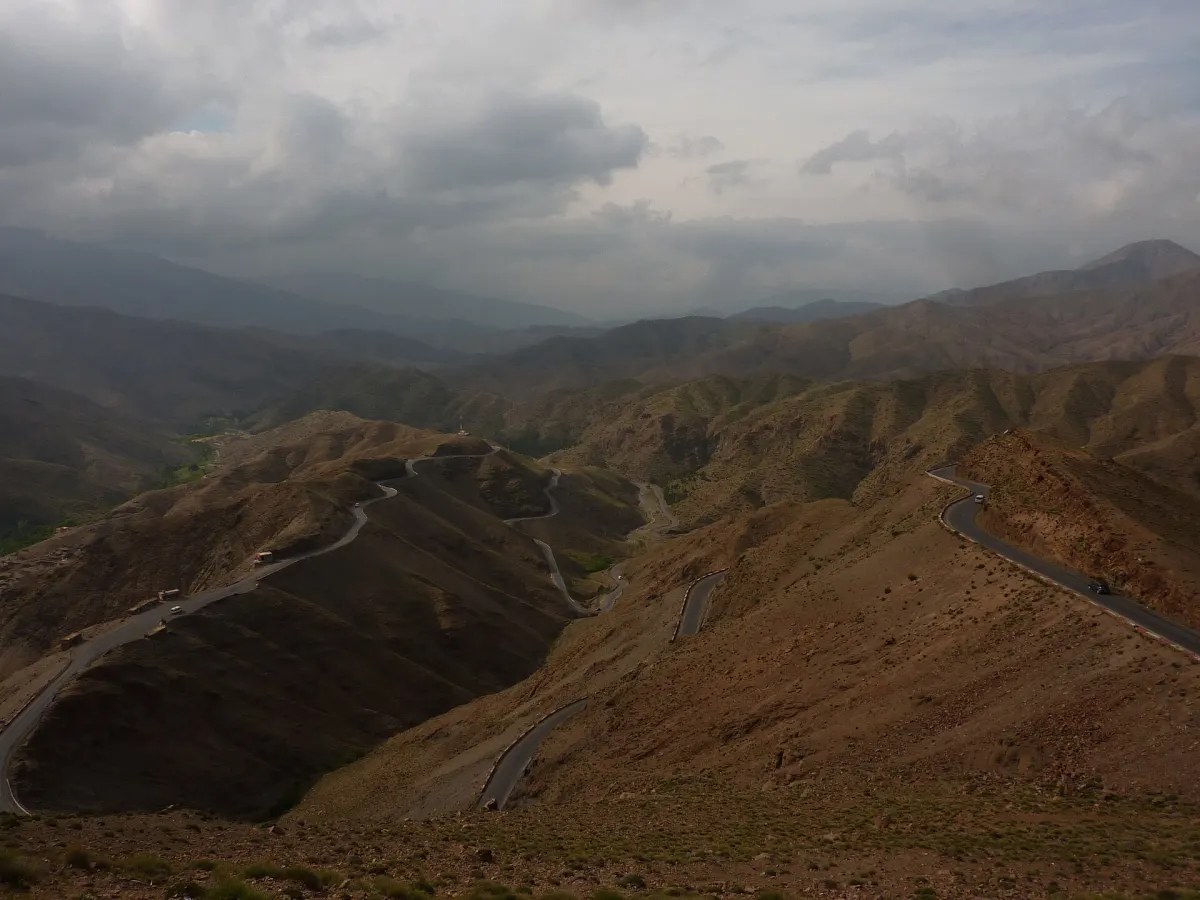
The road south is the N9, and the Tizi n’Tichka is the pass it crosses at 2,260 m — the highest on the country’s main road network. The climb is gentle for the first 40 km through Tahanout, then turns serious past Taddert, where roadside stalls sell argan oil, honey and geodes for cash. Count on 1h30 to 2h to the summit, 3h30 to 4h to Aït Ben Haddou and about 4h to Ouarzazate.
The pass opens the whole southern half of the country: Ouarzazate with its kasbah and film studios, the Draa valley and Zagora beyond it, the ksar at Aït Ben Haddou, and — turning east on the N10 — the dunes at Merzouga. It also opens something quieter: near the summit the old road drops into the Ounila valley toward Telouet and its half-ruined kasbah, rejoining the main road at Aït Ben Haddou. Slower, emptier, the better drive.
At the wheel, expect what a mountain pass is. Switchbacks with no shoulder worth the name, trucks that cannot hold 30 km/h on the climb, and local drivers who overtake on bends because they know the road and you don’t. You will spend the ascent in second and third. The route has been under widening for years, so four lanes can end without warning in contraflow, gravel and a flagman. The pass closes in heavy snow between December and February.
When to go and what it costs you
July and August run 38-42°C, with days that touch 45°C. That is not a reason to cancel, but it is a set of demands on a rental car. Test the air conditioning in the lot, engine running, before you drive away: the fleet here gets hammered and the A/C is the first thing to give up. Check the tyre pressures, the spare and jack, and that the cooling system holds in stopped traffic — heat plus under-inflation is how holiday blowouts happen. Park in shade or underground, and drive as little as possible between 13:00 and 16:00. The Atlas runs 10-15°C cooler than the city, the coast 8-10°C cooler.
The better seasons are March to May and late September to November. Winter days sit around 20°C and are very pleasant, but the pass can close and desert nights are cold.
Costs, September 2026: petrol is around 14.95 MAD a litre and diesel around 15.04 — diesel, unusually, is the dearer of the two in Morocco — so a 200 km day in a small car is roughly 200 MAD of fuel and a week of day trips lands around 900-1,200 MAD. Tolls apply only on the autoroute — Marrakech to Casablanca is about 85-90 MAD — and none of the six trips above is tolled unless you take the autoroute to Ouzoud. Budget 40-70 MAD a night for guarded parking, and 10-20 MAD the first hour at the airport.
The car you actually want here
The Moroccan rental fleet is overwhelmingly manual. If you do not drive a manual, book an automatic several weeks ahead and expect to pay more for it: there are far fewer, and in high season they go first. A manual is no disadvantage on the Tichka, but an automatic is easier in Marrakech’s stop-start traffic.
A compact hatchback or small sedan — a Clio, an i10, a Logan — is the right car here. It fits the narrow entries to the lots at Bab Doukkala and Bab Laksour, parks in spaces a larger car will circle past, and is cheap to run.
For the Atlas the engine matters more than the badge. At 2,260 m a naturally aspirated engine makes noticeably less power than at sea level, and a 1.0-litre with four adults and luggage will spend the pass in second gear. Take the 1.5-litre or larger. Most of the local fleet is diesel, which has more torque for exactly this climb and burns 25-30% less fuel at the same pump price.
Do you need a 4x4? No. Every road in the table is paved, and the graded pistes across the Agafay and the lake shore at Lalla Takerkoust are fine in an ordinary sedan. Ground clearance matters more than four-wheel drive, because that lake shore road is rutted and the last stretch to some Agafay camps is rough. Do not take a rental into sand.
Practical notes
Menara airport (RAK). About 6 km and 15-20 minutes from Jemaa el-Fna. Desks are in the arrivals hall, or your provider meets you in the forecourt — check which before you fly, and ignore anyone who approaches you without your name. Photograph the car and the fuel gauge at handover, and allow 30-45 minutes before check-in on the way home.
Deposit, licence and age. The pre-authorisation needs a credit card in the main driver’s name; debit cards sometimes work with a larger hold, so confirm before flying. A licence not written in Latin script needs an International Driving Permit bought at home.
Fuel. “Gasoil” is diesel: putting petrol into a diesel is a trip-ending mistake, so say the word out loud if that is what you want. Fill up before leaving the city for the Ouzoud and Tichka runs — rural stations are fewer, some cash-only, some shut at night.
Overnight parking. Use guarded lots, keep the ticket, photograph the car, leave nothing visible inside. At 40-70 MAD a night you are buying the guardian’s attention, so ask your riad to arrange a space before you arrive.
Cash and connectivity. Keep 500-1,000 MAD in 20s and 50s: parking guardians, small cafés, rural fuel and airport ticket machines are all easier in cash, and ATMs thin out up the Ourika valley. Buy a local SIM at the airport (around 100 MAD for 20 GB) and download offline maps before leaving the city.
Marrakech gives you more than a city: within an hour there is a river valley, a stony desert and a lake, and within four a pass, a ksar and the road to the Sahara. A car is what turns those from excursions you book into places you simply decide to go — and IVVER lists cars from professional providers, with pickup at Marrakech Menara and in the city, so the only decision left is which days you want one.
Photographs: Jemaa el-Fna by Jakub Hałun, CC BY 4.0; Koutoubia by Jorge Franganillo, CC BY 2.0; riad courtyard by Grand Parc - Bordeaux, France from France, CC BY 2.0; Tizi n’Tichka by Adrian Farwell, CC BY 3.0. The souk photograph is CC0 and requires no credit. The register of all image credits, with the Commons title and source page for each: /blog-media/CREDITS.md.